Mursi Tribe in Omo Valley 057
The next day we leave early for the Mursi tribe, because we want to go as far as possible, and the information about the road conditions are very vague. So we start in the morning and immediately are slowed down by a herd of cattle.
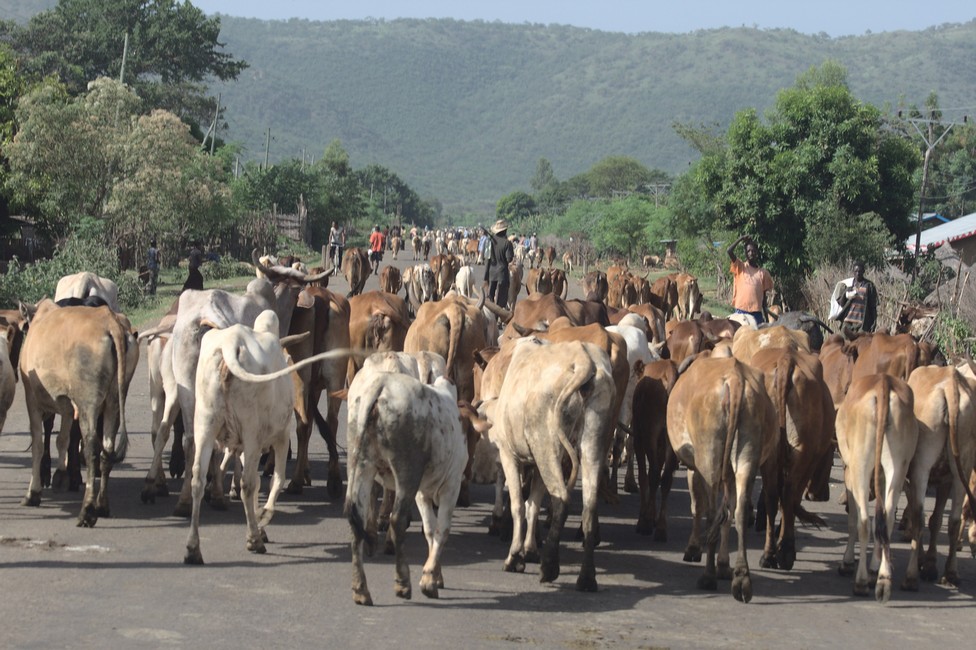
The cattle is followed by goats, trucks and cars rummage through the crowd, that is Africa.
Now things get tight, nobody knows really, where to go, but here in Africa everybody respects the others, everyone can use anything and have the same rights, as an African woman once told us in a shop: “Africa is sharing” and this is actually true.
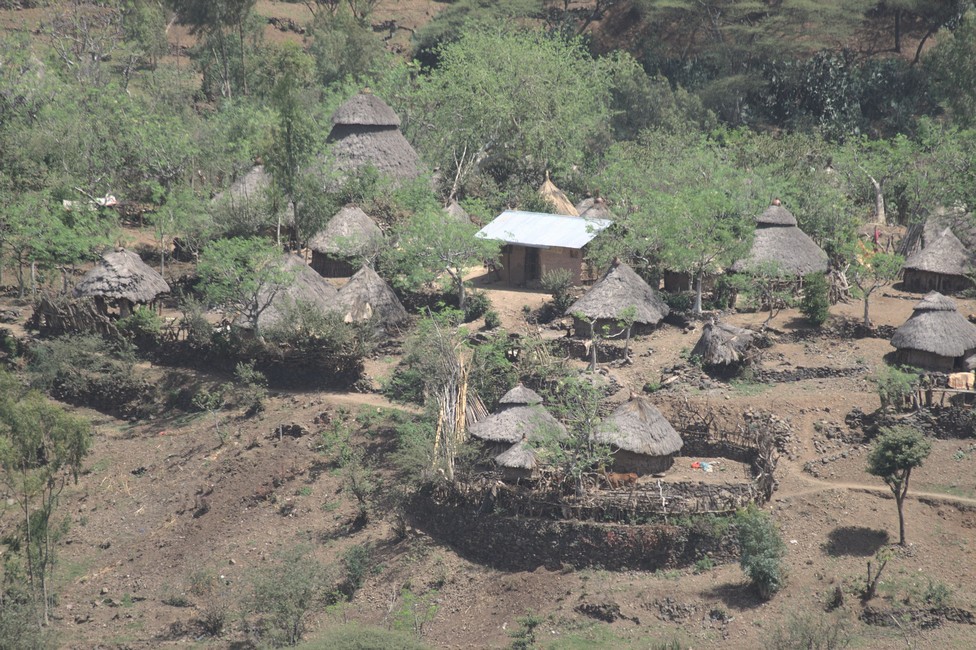
A little later we are once again on a gravel road. Average speed is walking speed, because we could go on foot, but driving is still more comfortable.
Gravel roads are a big problem for vehicles, even for off-road vehicles, but for our European road limousine a gravel road cannot be driven without damage. We are planning to buy a Land Rover in South Africa and continue. But the problem is to sell the van.
Even here in absolutely remote areas, roads are being built. Often gravel roads are completely replaced, but often only repaired after the rainy season, because the waters wash away the loose material and every season they need to be repaired.
Feasible only here in Africa because labor costs are very low, a road worker earns about 100 US$ monthly.
We have reached Jinka and visit Mago National Park in which the lip plate – people live, called Mursi.
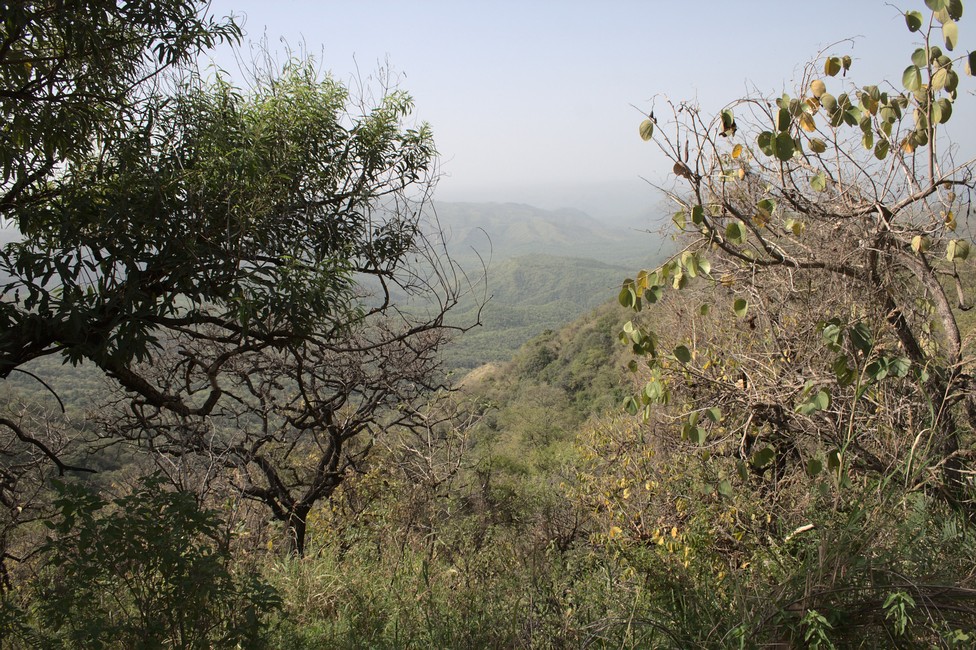
We must take a guide and an armed soldier, as the Mursis are dangerous, and soon Mursi warriors block the road.
They do not want to let us pass – our guide negotiates. What they want is not clear. It is not money. Our leader speaks the language of the Mursi because he has lived a long time with Mursi people, on an outpost of civilization.
After some back and forth and a little pressure with our vehicle, they give the road free. Our guide is a bit concerned.
After a few kilometers, we reach a Mursi village. We are viewed at suspiciously.
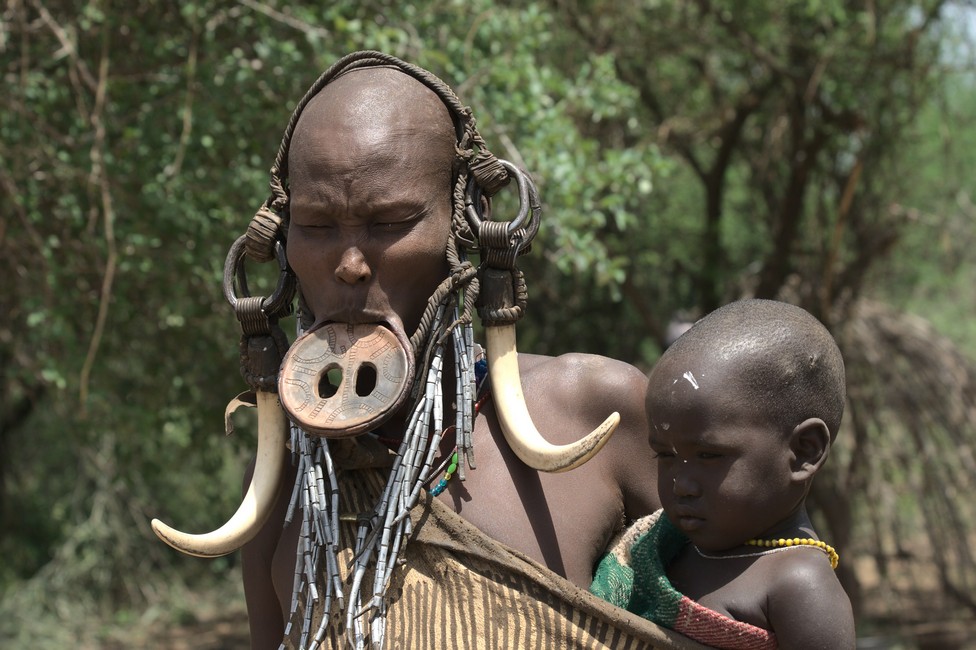
Our guide explains to the chief who we are and where we come from and the purpose of our visit.
The Mursi live in Stone Age. They are a small tribe of less than 4,000 people who live between Jinka and the Omo river in a barren landscape. Their main villages are situated on a plateau surrounded by mountains, which does not lead to progress because of the remoteness.
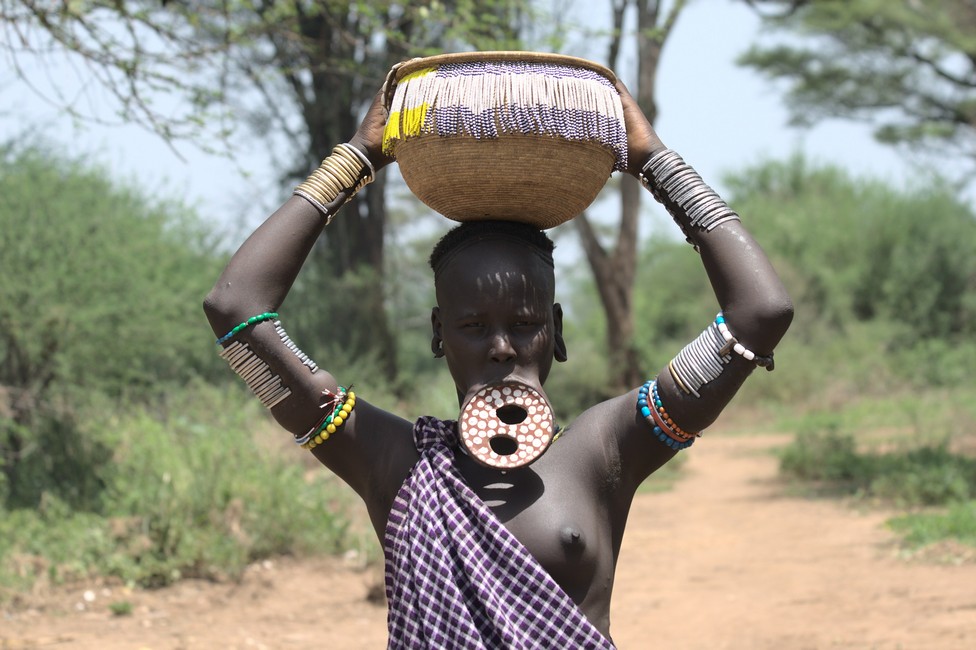
The Mursi are cattle farmers, utilized are mainly blood and milk.After the rainy season, they also have a little agriculture, especially on the banks of the Omo, after the high water has drained. The most striking feature of the Mursi woman is the unusual beauty clay plates, which they wear in the cut lips. Scarification and body painting are for beauty, not only for women but for men as well. In the Mursi there is still circumcision of girls and young women. It can be observed that the living conditions of the Mursi in the last 50 years have not changed. They live in the same inhospitable area, the housing situation has not changed, new are hand-operated water pumps and a police station was built.
Sources of income have not been established. By decreasing density of wild animals hunting is difficult. There formerly common animals such as antelopes, oryx, zebras, ostriches, giraffes and buffalo are found only in small numbers.
The only income they have recently, is the entrance fee to their villages, and you must pay for each photo. If you want to negotiate fairly well, they very easy get aggressive. Unfortunately, these revenues are often converted into alcohol which means a huge problem in their villages.
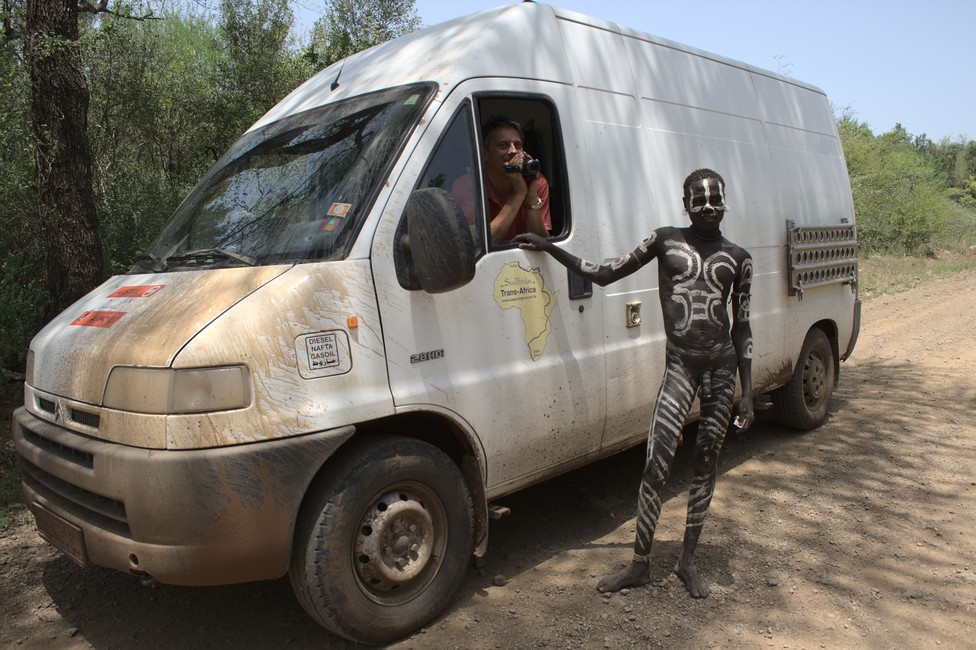
The future of the Mursi is uncertain. Many questions arise to which there are no answers, or answers that are no solutions. The danger that they degenerate into living objects is high, the chance that they may retain their traditonal way of life is low. Due to the seclusion in which they live, these processes can be delayed but not stopped. Will Mago National Park be a living ethno museum? We do not know and can only hope the best for this ethnic group.
One Comment