Leptis Magna – A New Years Visit 019
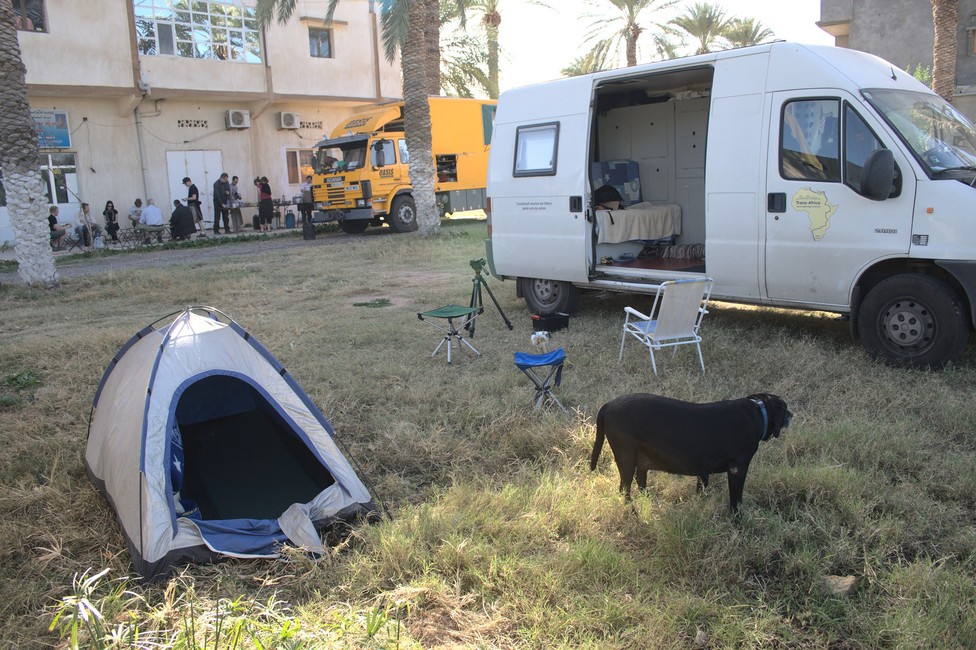
The campsite is located five minutes from the excavation site. We make ourselves comfortable, now we do not want to go on sightseeing tour.
We use the remainder of the day with laundry and cooking. Tara feels good, because here there is grass, in Tripoli on the concrete parking lot she did not like so much.
We end the day comfortably and recharged for tomorrow’s visit of Leptis Magna, also New Year’s Eve is tomorrow and we should keep fit until midnight.
We agree to start in the early morning , but Reeda our guide is not there, maybe he is in town for some stuff. So we must wait. Reeda is a young guy of 20 years and sleeps in his tent. He’s a nice fellow, though he sometimes drives us mad. It is his first trip as a guide and he has no idea of the route or the sights. We like him anyway, because he tries very hard. Tara also likes him very much, because he always shares his food with her, remarkable, since he grew up in the Muslim culture and dogs have no place here, as they have allegedly eaten Mohammed.
He likes Tara and brings her a present, a toy camel that he had bought in the city in the morning. Tara is obviously enthusiastic, small gifts keep friends.
After breakfast we start for visiting the site. Just behind the entrance there is the imposing triumphal arch of Septimius Severus. The four-bow limestone was later, when the Emperor came for a visit, covered with marble. We pass along the Hadrian’s baths. In a 20 km long aqueduct the water was conducted until here in the baths. In one part of the baths there is a pool. Right next to the baths is the Palaestra, the sports arena of the time. The plant was used especially for boxing. The luxurious design points out that these sports were reserved for the rich.
Even a nymphaeum should not be missed in a Roman settlement. It is a sanctuary dedicated to the wells and the water nymphs.Particularly impressive is the new forum. The dimensions are impressive. Approximately 60×100 metres tall, the forum is still paved with marble slabs. Once it was surrounded by a continuous two-story colonnade.
At one side of the square is the Basilica of Severus. The nave is surprisingly large. The basement is rectangular with semicircular apses with main and two side aisles. Made of white marble are the square Anten columns, which are richly decorated. Some of the deeds of Heracles are depicted, wine symbols as leaves and drinking scenes as well. The floor and walls were covered with marble, the columns of pink Egyptian granite, Corinthian capitals of white marble.
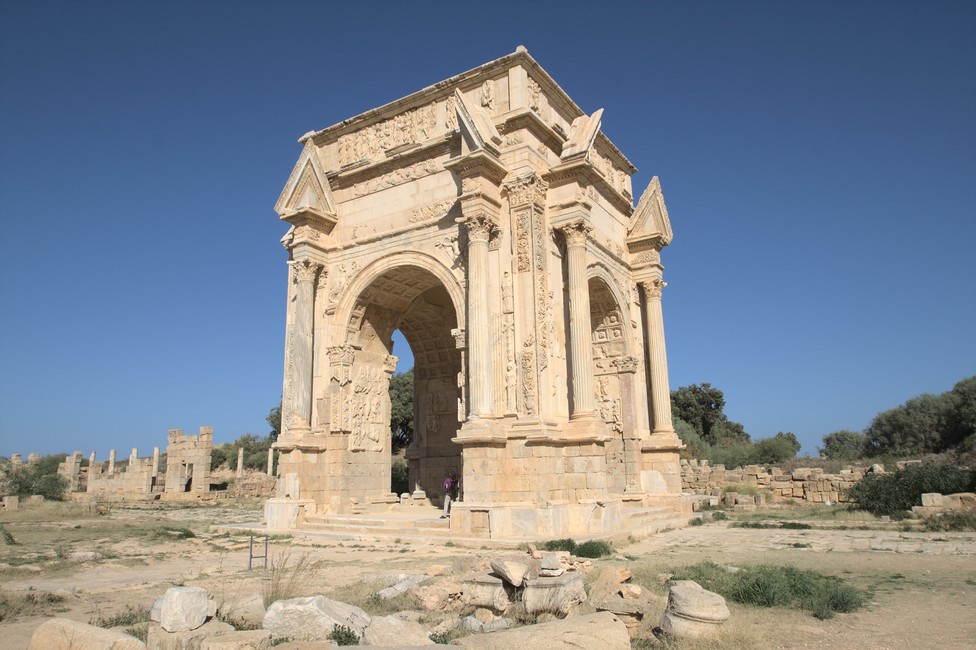
We stroll through the ancient city and enjoy the atmosphere here. In my imagination, the city is filled with life and I can well imagine how life was happening here.
Finally, we take a look at the theater. The building was donated by Hannibal Rufus, a very wealthy citizens of the city. It is the largest preserved building of its kind. The inauguration took place in the first century AD. Steeply climb the stone seats in a semicircle, the theater overlooks all other buildings of Leptis Magna. In the audience a surrounding parapet separates the better places from those of the common people.
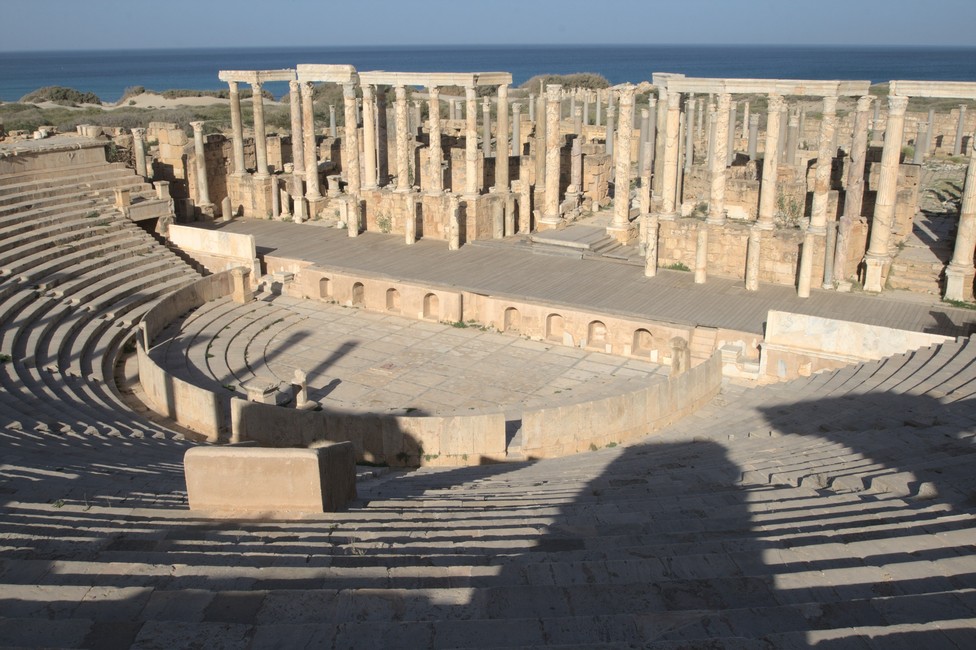
It is time to leave the excavation site, because we want to make more preparations for New Year’s Eve. Alcohol is not officially available in Libya, and so we buy non-alcoholic beer and much worse – non-alcoholic sparkling wine.