Libyan Desert – Heading to Egypt 020
Reeda will celebrate with us, he is far from his home, but he’s fun to be with us. We sit together comfortably and expect the new year. (Reeda has organized homemade liquor, but we decline with thanks, who knows what kind of devil it is.)
Reeda is Berber, and he plays its traditional music for us, stored in his mobile phone so we get musical entertainment during the evening. He tells us about the customs of the Berbers, and that he may see his beloved only in the presence of relatives.
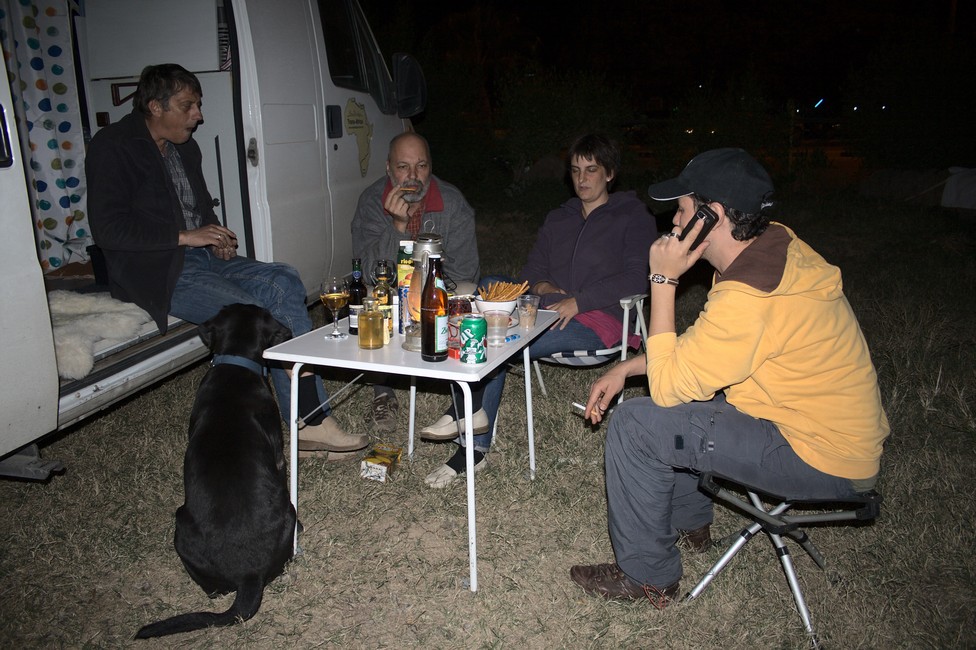
We are waiting for midnight. The surprise is great. No bangs, no missiles and no fireworks. The happy new year is peaceful and tranquil. We go to bed, because tomorrow we want to go on early.
To go to Egypt, we have to cross the Libyan desert, about 500 kilometers without a gas station, we should make it with one full tank.
Early in the morning we are back on the road. The loading techniques of the Libyans is interesting. On the car is loaded, what is possible, and the load is often higher than the vehicle itself.
Here, too, is driven back and forth, overtaken left and right, often simultaneously. Traffic rules do not exist, or they are not met.
The roads are surprisingly well. Most of it is tarmac, this road is in great condition.
Overland transport is not dense. There are few private cars, the major share is commercial vehicles, here outweigh the trucks.
We drive for hours, because the distances are far. Tara makes herself comfortable on the rear bench , here it is soft and she can sleep in peace.
We get orientation problems. The device does not know the way and our leader Reeda has no idea. We can not read the Arabic roadsigns and so Bodo drives ahead , he has Reeda on board, he can at least read the road signs.
Nevertheless, we wander about, and so we ran to the right, because Reeda has to ask for the way.
Finally, the situation is clear and we can continue the journey. We leave Ajdabiya and now starts the route through the Libyan desert.
Libya is the fourth largest country in Africa and 90% of which is desert. Here during a period of 25 years, there is no measurable precipitation .
The vegetation is sparse and there are only dry bushes. Only camels can eat, they can be found here and there at the roadside.
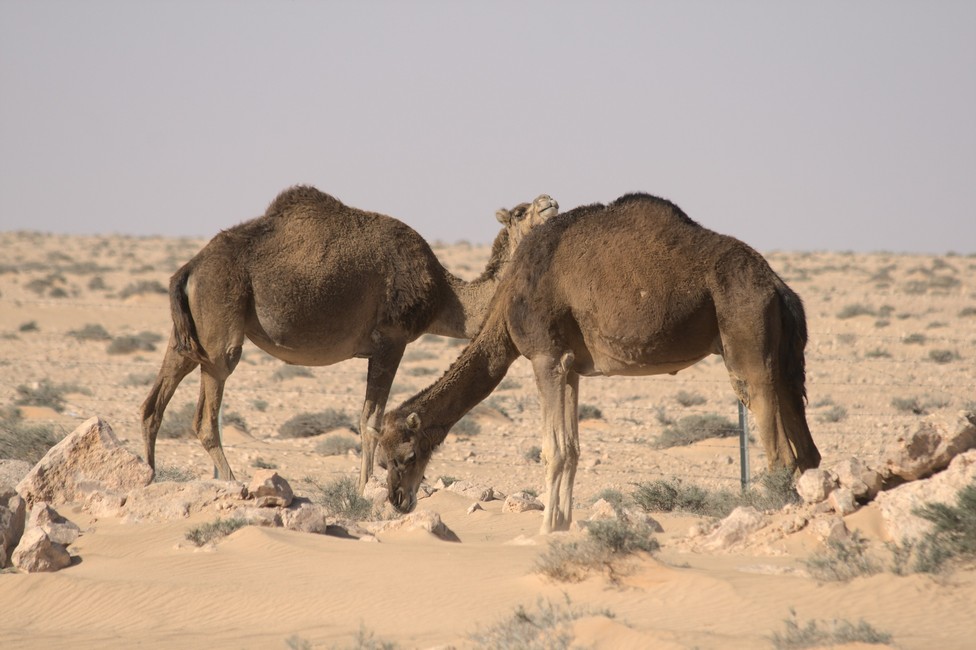
We must continue, because we need a place to sleep before it gets dark, Bodo drives ahead, because the truck is better off-road and so he is looking for an overnight stay, we can also reach.
After a short time he has found a good spot away from the street. We set up comfortably and get ready for the night. The cat is happy to get out of the truck, he obviously feels comfortable. We are also pleased that the long day comes to an end.
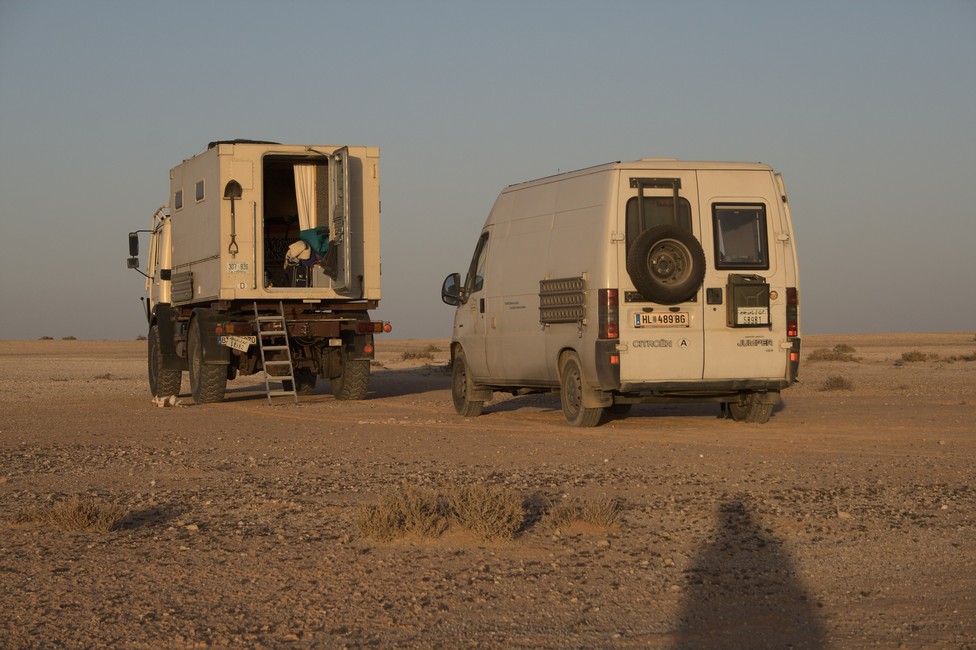
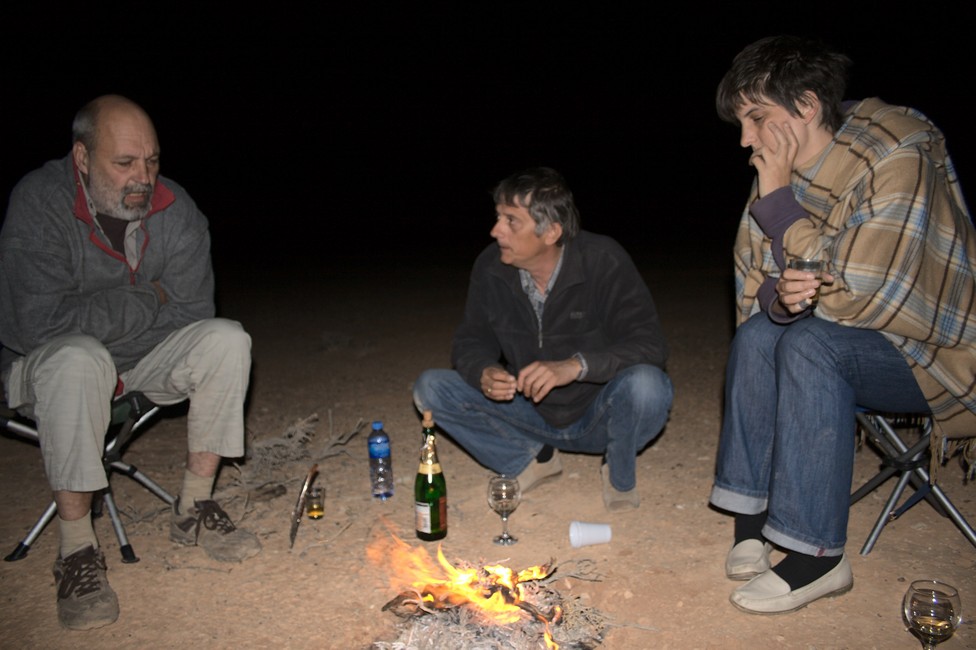
Our bushcamp is situated in the absolute nothingness and Reeda sets up his tent and is preparing a campfire.
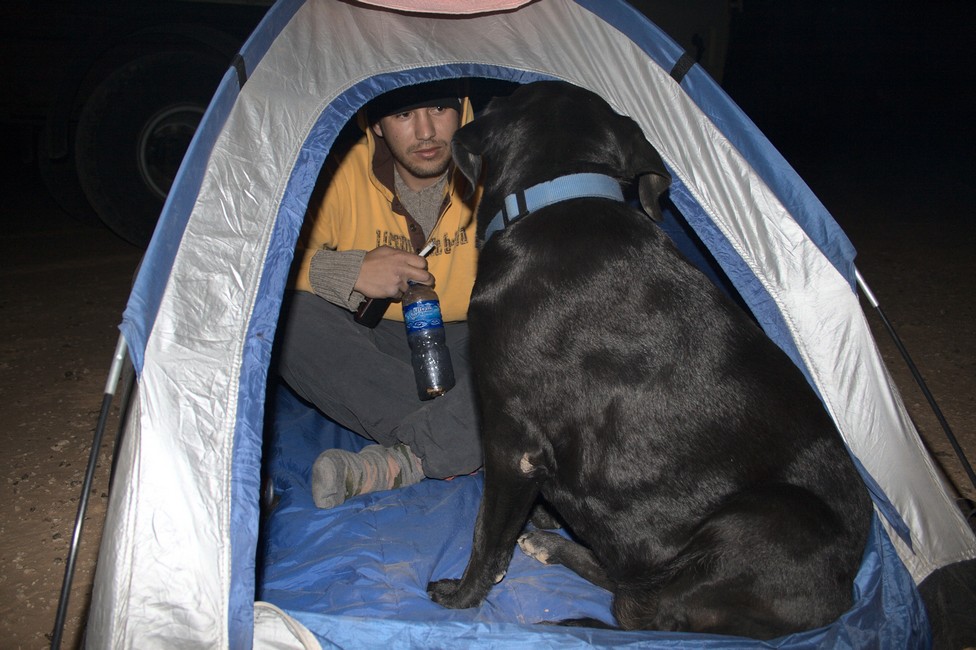
We cook a delicious dinner and sit a while at the campfire. We want to get to the Egyptian border tomorrow, then it’s time to say goodbye to our guide Reeda.
In the morning we leave the spot and follow Bodo’s track, that we do not get stuck in the soft sand. It is still 300 kilometres to the Egyptian border, we already are curious what we can expect in Egypt.
One Comment