Rural Sudan 040
Next morning we continue along the Nile in rural Sudan. We want to the Pyramids of Karima. We do not take, however, the route through the desert from Dongola, but travel on along the Nile.
Although the villages along the Nile are very small, each has a mosque and sometimes quite large. Sudan is 70% Muslim, Sunnis in particular. Islam came to Sudan as the Arabs expanded their spheres of influence, after the death of Muhammad in seventh Century. Here in the main settlement area of the Nubians the Islamization happened 600 years after the death of the Prophet, because the Nubians were originally Christians.
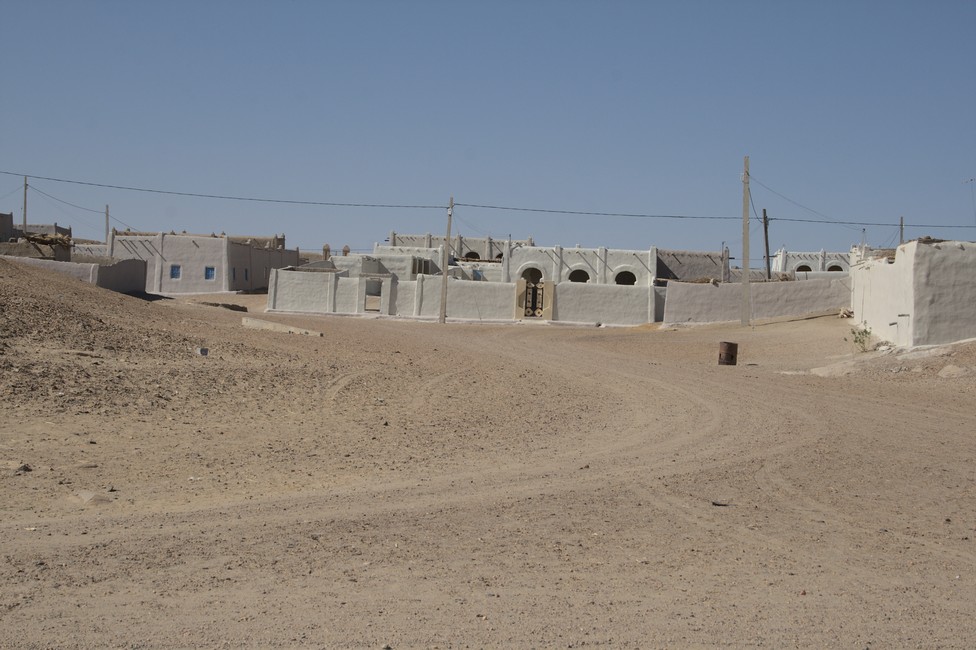
We stop in a village to take a closer look at the houses around us. Here’s a brick house out of clay, there’s always a wall decorated with beautiful entrance gate. The houses, as well as the walls are painted, often white-washed, sometimes decorated with patterns.
Striking is that no people are on the street, but not surprising, because at noon it has well over 40 degrees in the shade and so the people spend their time in the cool courtyards of their buildings and properties.
A special feature is the small brick water or well houses that can be found in front of many houses. There are always water jugs inside ready, which are also available to the passing stranger.
Sudanese cemeteries are always just outside a settlement, the graves are marked only with a stone. Slogans such as name or date of death are missing.
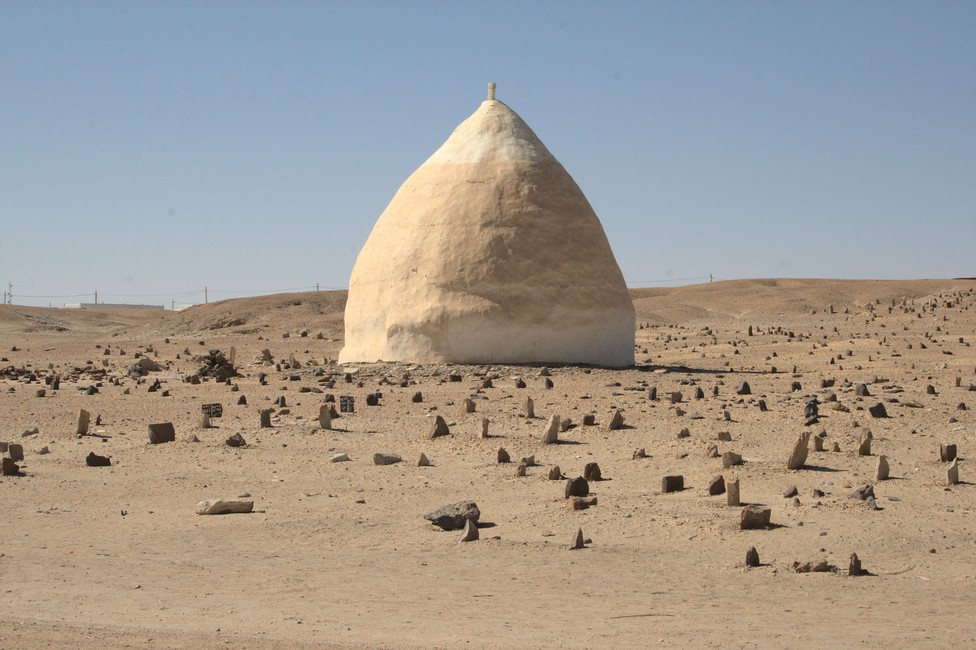
The Islamization process was a slow one, since the Arabs held on to their nomadic traditions and originally had no interest to Islamise other areas. Islam was brought in the Sudan by some holy men. Only in the 16th century there was a kind of islamisation established by the Funj kingdom. The Funj were Muslim rulers, which brought stability and attracted missionaries from Cairo and Baghdad. Among them were the Sufis, a new group, which also play an increasingly important role in the Sudan.
Reminded by the green fields of vegetables, we want to shop for dinner. We need eggs and vegetables that we buy in a small shop in a village.
The shop offers the bare essentials, we get eggs and vegetables, as usual communication is difficult in remote areas. Whether here a stranger has ever shopped once is uncertain.
The men are friendly, but confused, with such frequent occurrence of women.