Desert Camp 029
We spent a lot of time shopping and so it is getting late and we need soon accommodation. We are now already 90 days on tour and we get increasingly doubts whether we will be in Cape Town in 142 days . We are slowly getting used to the traffic rules here and thus we find a line of “no overtaking” also as just a street decoration, as the locals do
On the roadside suddenly a sign to a campsite appears. We turn off and find ourselves on a beautiful desert camp.
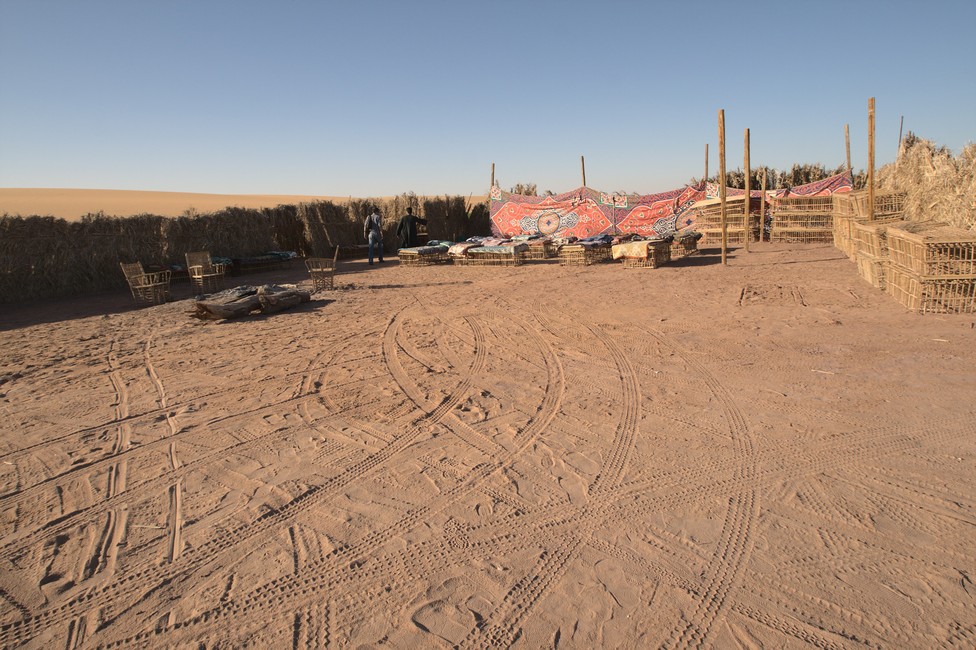
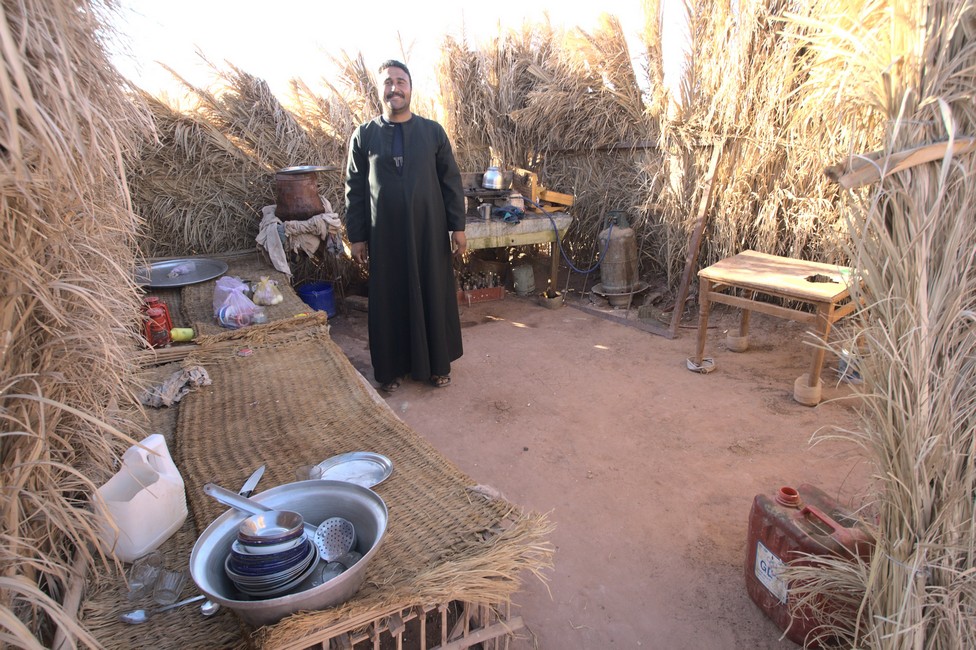
The owner is a nice guy, but can not speak English nor do we speak Arabic, but we have fun together. He even has a small kitchen where he prepares tea for us. We welcome this invitation and sit for some time together with him.
The accommodation consists of simple bed frames under the open sky, we do not qualify, because we sleep in our vehicles directly at the dunes.
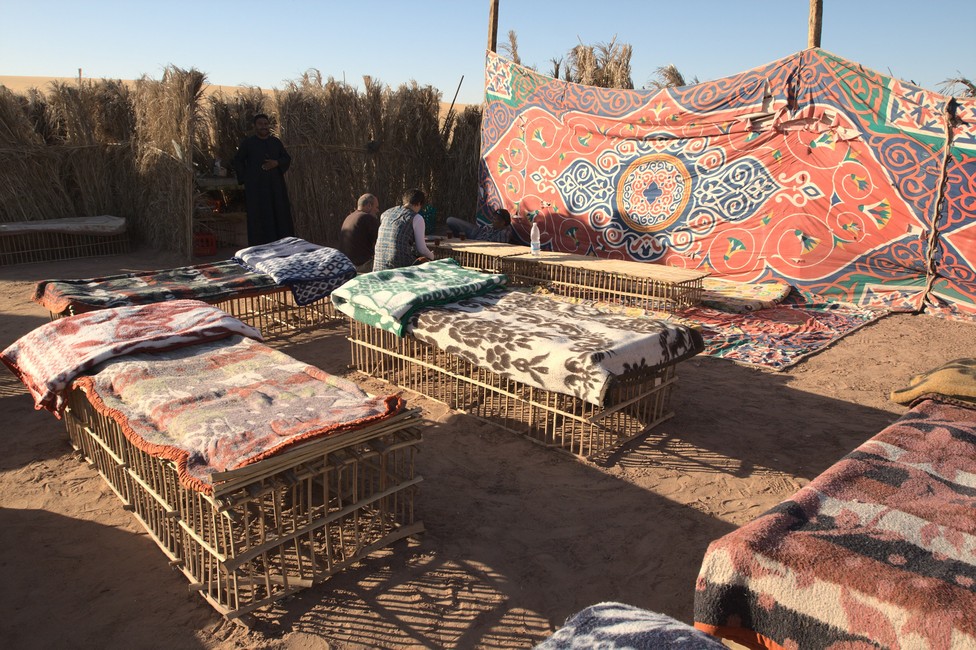
It will be one of the most beautiful bush camps in the desert.
Next morning we set off to our last part through the Libyan desert. We want to reach the Nile at Luxor in the evening .
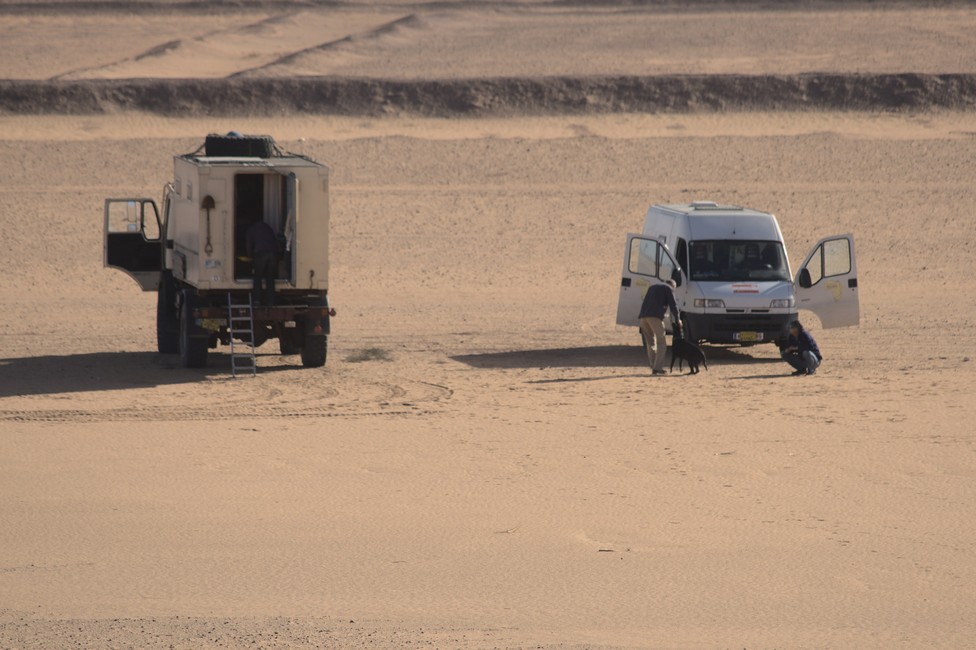
To Luxor it is 300 kilometres, which should be done on good asphalt roads in 4-5 hours, provided there are no car problems. First we have to get from the camp to the paved road. Wistfully we leave this beautiful place. Through soft sand passages we have to get momentum, so we do not get stuck in the sand. To prevent this, we reduce tire pressure depending on the difficulty of the terrain to 1.5 bar instead of 4.5 bar. On tarmac, we increase pressure with our compressor.
Our days are numbered in Egypt. We will then have to overcome one big hurdle . The Lake Nasser reservoir. The loading of the vehicles will be a real horror, as the vehicles are only loaded on to a pontoon, while the passengers must ride on the ferry. For us it is even more risky, because our dog Tara has to travel on the pontoon and we have to go with the passenger ferry. The problem in fact is, that the pontoon sails for two days, and the ferry takes one day, which means the Tara has to be two days and nights without us. The conditions and circumstances are very unclear. We hear many stories of dogs that were lost on the way, of course we are concerned about the question of food, water and Tara must also do her business. The closer this day comes the more anxious we feel, as we do not want to lose Tara. We must find an alternative, which we do not know yet.
The decision as we organize the ferry, we suppress for the time being, we are now on asphalt and want to Luxor. Only in Aswan a solution has to be found.
The road is excellent and we are progressing well. We can make speed after a long time we really press the gas pedal and the scenery flys past.
Because of good roads, we already reach the Nile Valley around lunch time.
One Comment