Makthar Tunisia – Overland to Cap Town 005

Before going to Makthar, Tunisia, a cup of coffee in the adjacent cafe in Dougga. The further route is discussed. We drive a few miles to a hotel, there we will spend the night on the parking lot. Before dusk we reach the hotel. The car park is not situated idyllically which was not expected anyway, but we can use the showers, and get delicious dinner with good wine. Wine is also available in Muslim countries.

At early morning we start again. Tara does her morning walk, while Achim and Ingrid are still asleep in the truck. From our overnight stay in Kef we travel through vast plains and rolling hills in the direction of Makthar.

Again and again we stop to enjoy the magnificent view. The area is desert-like, a stone desert with only sparse vegetation. In the distance we see Hans and Ursl coming with their 4 wheel drive Mercedes Sprinter. And already Guido and Heidi are catching up. The last to arrive are always the tour guides Renate and Joachim, as they collect those who might have broken down on the road. They are the last to start the day’s route. Gathered at the roadside, we have fun and enjoy the beautiful landscape. But soon it goes on, because we must master our day’s route, otherwise we will be behind our daily schedule, because we want to be in Cape Town in 142 days on our overland travel.

We reach the ancient Makthar. The most important building is the Trajan’s arch, that borders the Forum in the south. It was built by the citizens in honour of their emperor. After the fall of Carthage and the flight of the Carthagians to Makthar their culture shaped the city and held its own against the later Roman influence.
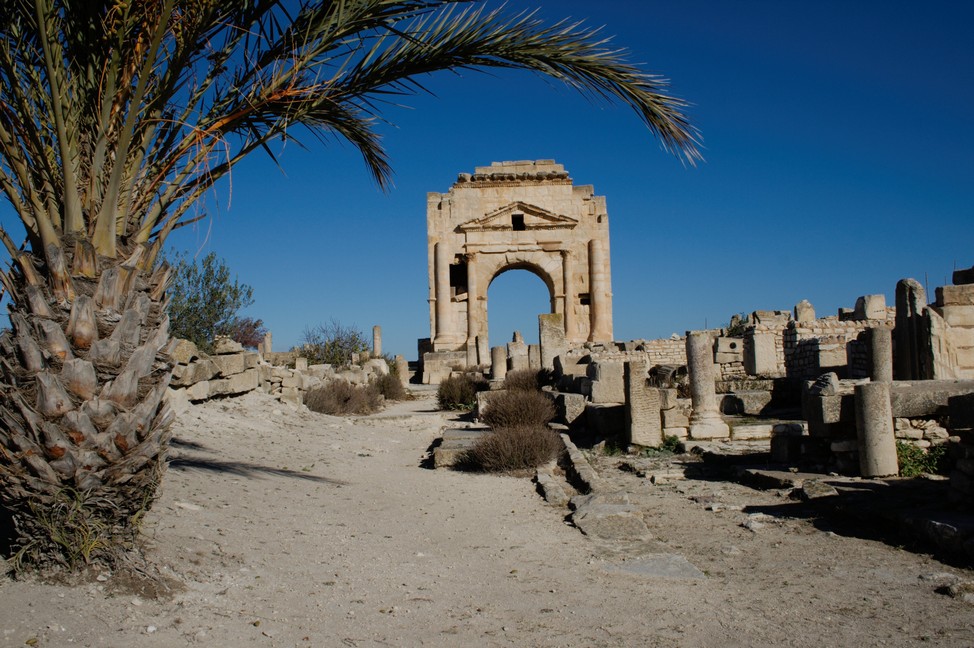
Makthar Tunisia
Makthar

Well preserved are the thermal baths of which columns, pools, mosaics and arches still bear witness to their former splendour. The cobbled streets are also well preserved, and the amphitheatre, with oval arena, surrounded by two circular walls, as well.

From Makthar Tunisia, we go on to the holy town of Kairouan on the same day.

Next

Similar Posts

  • Luangwa River

    The Luangwa River: Navigating the Heart of Zambia’s Wilderness Flowing like a lifeline through the rugged terrain of eastern Zambia, the Luangwa River stands as a testament to the power and grace of nature. With a sinuous path that stretches over 770 miles (1,240 kilometers), this majestic watercourse originates in the Mafinga Hills of northeastern…

  • Twyfelfontein 108

    After we left Petrified Forest Khorixas, we drive a little further to Twyfelfontein. A World Heritage Site by Unesco. With a guide, we entered the site. The rock arena is ideally situated slightly increased between protecting hillsides and panoramic views across the savannah. The farm house of the former owner. “Dubious Well,” called the farmer…

  • Well of Kairouan

    The Well of Kairouan, also known as Bir Barouta, is a historic well located in the city of Kairouan, Tunisia. It holds great cultural and historical significance, representing an important water source and architectural marvel within the city. The Well of Kairouan is believed to date back to the 9th century and was constructed during…

  • Tripoli Sights

    Tripoli sights: From ancient Roman ruins to bustling markets and architectural wonders, Tripoli offers a tapestry of experiences that will immerse visitors in its fascinating heritage. Here’s a glimpse into the sights that make Tripoli a captivating destination: Tripoli sights weave together the threads of Libya’s rich history and vibrant culture. From ancient landmarks to…

  • The Nile felucca

    The Nile felucca is an iconic traditional sailing boat that has been navigating the waters of the Nile River for centuries. These graceful vessels have played a vital role in the history and culture of Egypt, serving as a means of transportation, trade, and leisure for locals and travelers alike. The design of the felucca…

  • Hamar people

    The Hamar people are an ethnic group residing in the southwestern part of Ethiopia, primarily in the Omo Valley. With a population estimated to be around 50,000, the Hamar are one of the largest ethnic groups in the region. They have a rich cultural heritage, distinctive customs, and a deep connection to the land they…

Leave a Reply

Your email address will not be published. Required fields are marked *