Overland Travel – Dougga 004
From Tunis to Dougga, we leave in the early morning to go around 100 km east to the ruins. Gently the old Roman settlement hugs on the hill. Already from a distance you can see the pillars of the largest and best preserved Roman cities of Tunisia.
We’re the first ones at the excavation site and wait for the others. We enjoy the peace and tranquillity that is still present here in the hinterlands of Tunisia. Shepherds herd their cows and everything is so peaceful.
Dougga only in 1997 was declared a UNESCO World Heritage Site. It was founded as a settlement for veterans of the former soldiers of the Roman Empire.
Our guide is waiting in the ruins until we are complete. The weather is cool, it is already Decembre , during this time the weather in Tunisia is quite changeable.
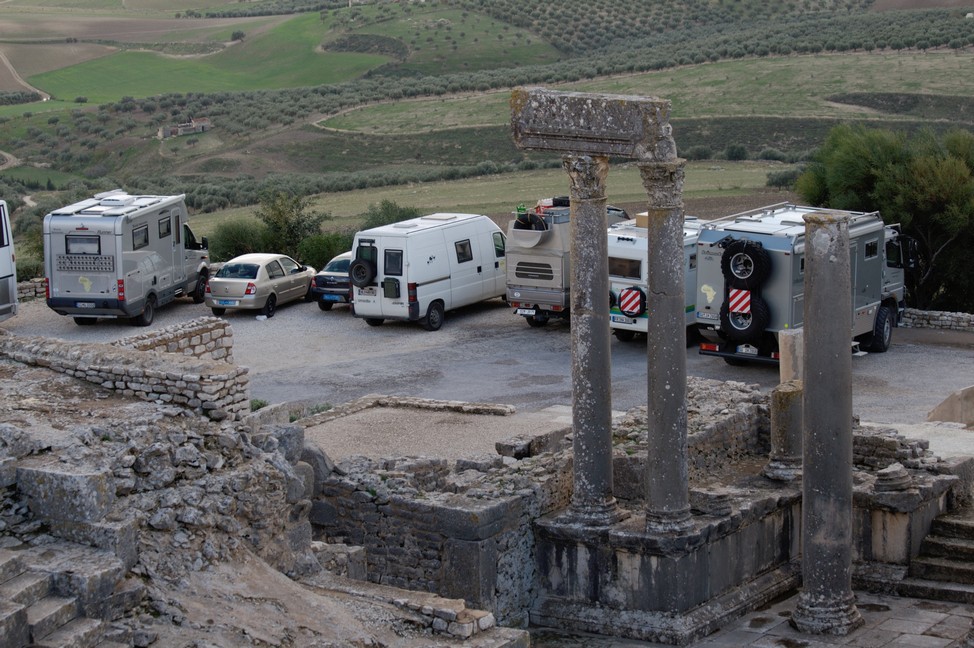
Already Guido and Heidi are arriving with their VW Synchro, followed closely by Achim and Ingrid with their truck. The Mercedes is the most powerful of the vehicles and we are all sure that he will pull us out of the sand or mud if needed.
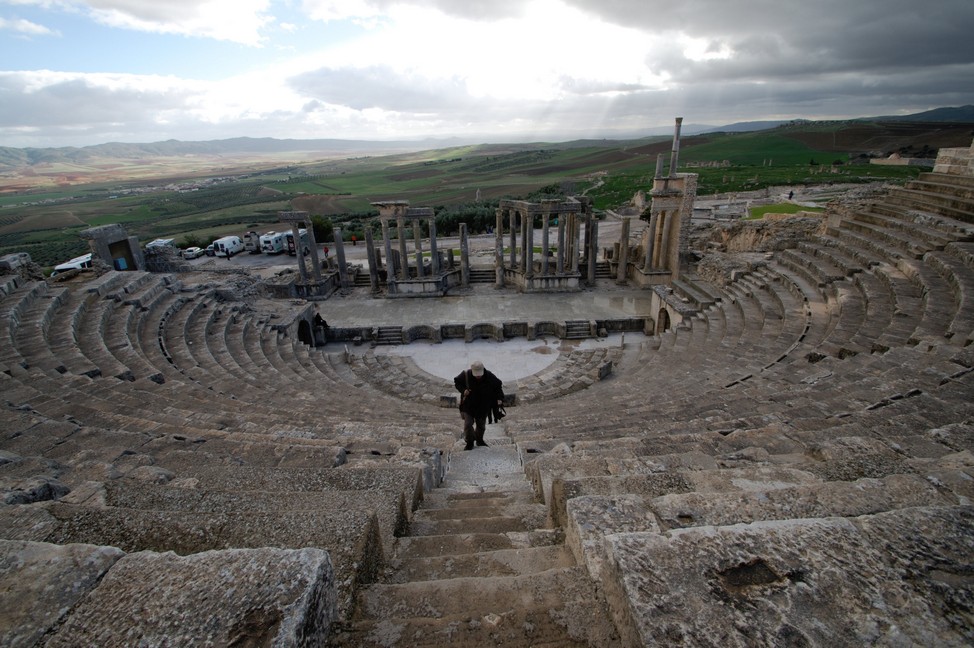
Our guided tour begins at the theatre, which seats about 3,500 spectators. 15 meters high are the seat rows. Our guide has a lot of knowledge, and tells about the city and the theatre. Hans listens patiently and interested, while Ursl is entirely dedicated to photography. We climb in the last row of seats and enjoy the wonderful view over the city. From the stage there still exists the porch with slender columns.
We are most impressed by the Capitol, one of the finest Roman monuments in Africa. The building was built as a temple for the gods Jupiter, Juno and Minerva. The pillars are outstanding with Corinthian capitals and gable relief with a golden eagle.
After the veteran settlement was firmly established old and new neighbourhoods grew together and a town centre was created with a forum and market. Wealthy citizens competed to beautify their city by generous foundations. Temples, theaters, triumphal arches and houses were added.
Also tanks and the Licinus thermal bath was built. The pools could be heated. The Baths are a maze of cold, luke and hot water baths, from lobbies, halls and adjoining rooms.
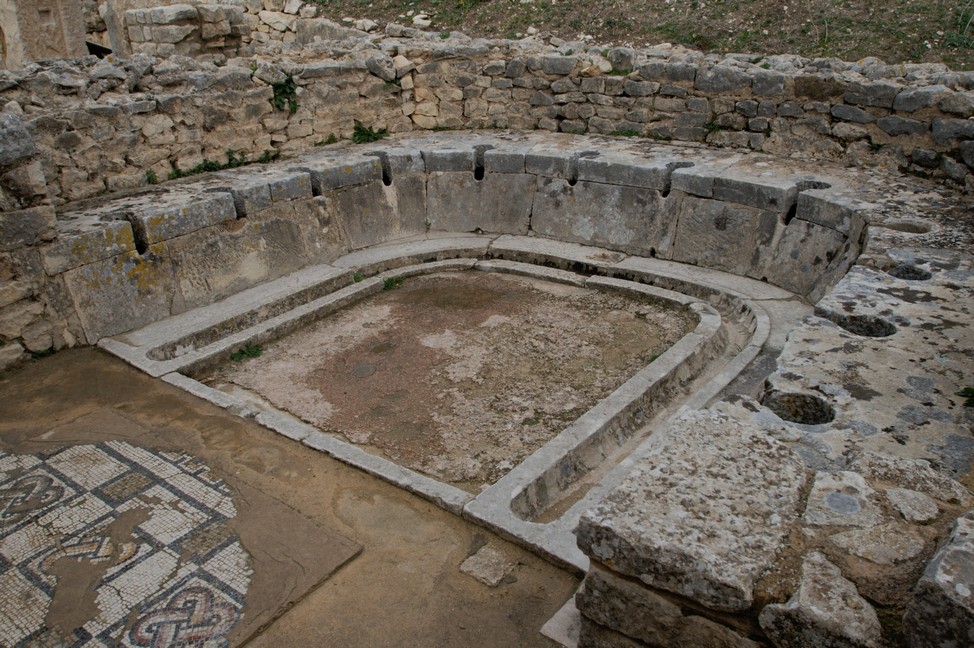
We are astonished about the toilets. The area is built in an oval shape, where every meter there is a hole, the people sat together sociable and made their big business. Unimaginable for today’s terms, yet exemplary for its time, with a trough and hand basin. Who knows what we will expect in this respect of our trip.
First of all, a cup of coffee in the adjacent cafe. The further route is discussed. We drive a few miles to a hotel, there we will spend the night on the parking lot.